
Saturday Strategy
Mortgage FAQ's, did you knows and much more...
Is it better to reduce the price or apply money to a Temporary Seller Buydown option?
With rates and home prices at all time highs, I wanted to provide you with a clear understanding of the 2-1 Temporary Seller Buydown option, which can be a beneficial arrangement for both buyers and sellers in a real estate transaction.
In a 2-1 Temporary Seller Buydown, the seller agrees to contribute a certain amount of money upfront to reduce the interest rate on the buyer's mortgage loan for the first two years of the loan term. This results in lower monthly mortgage payments for the buyer during the initial years of homeownership.
Here's how it works:
- Seller Contribution: The seller allocates funds to the buyer's mortgage lender. This money is used to cover the interest rate reduction for the first two years.
- Interest Rate Reduction: The buyer's interest rate is temporarily "bought down" for the initial two years. This means the buyer pays a lower interest rate than the standard market rate during this period.
- Monthly Savings: As a result of the reduced interest rate, the buyer enjoys lower monthly mortgage payments during the first two years. This can make homeownership more affordable and manageable, especially during the early stages.
- Long-Term Benefits: While the seller buydown helps the buyer save money initially, it's important to note that the interest rate will gradually increase to the original market rate after the initial two-year period.
This arrangement can make a property more attractive to potential buyers, as it provides immediate financial relief during the crucial initial years of homeownership. For sellers, it can help expedite the sale of the property by offering a more competitive financing option.
P.S. Can I count on you to call us when any friends, family or coworkers are looking to buy, sell or refinance a home? We'd love to help! You can just text/call me at 480.553.8770. * Did you know we can finance in 45 states?
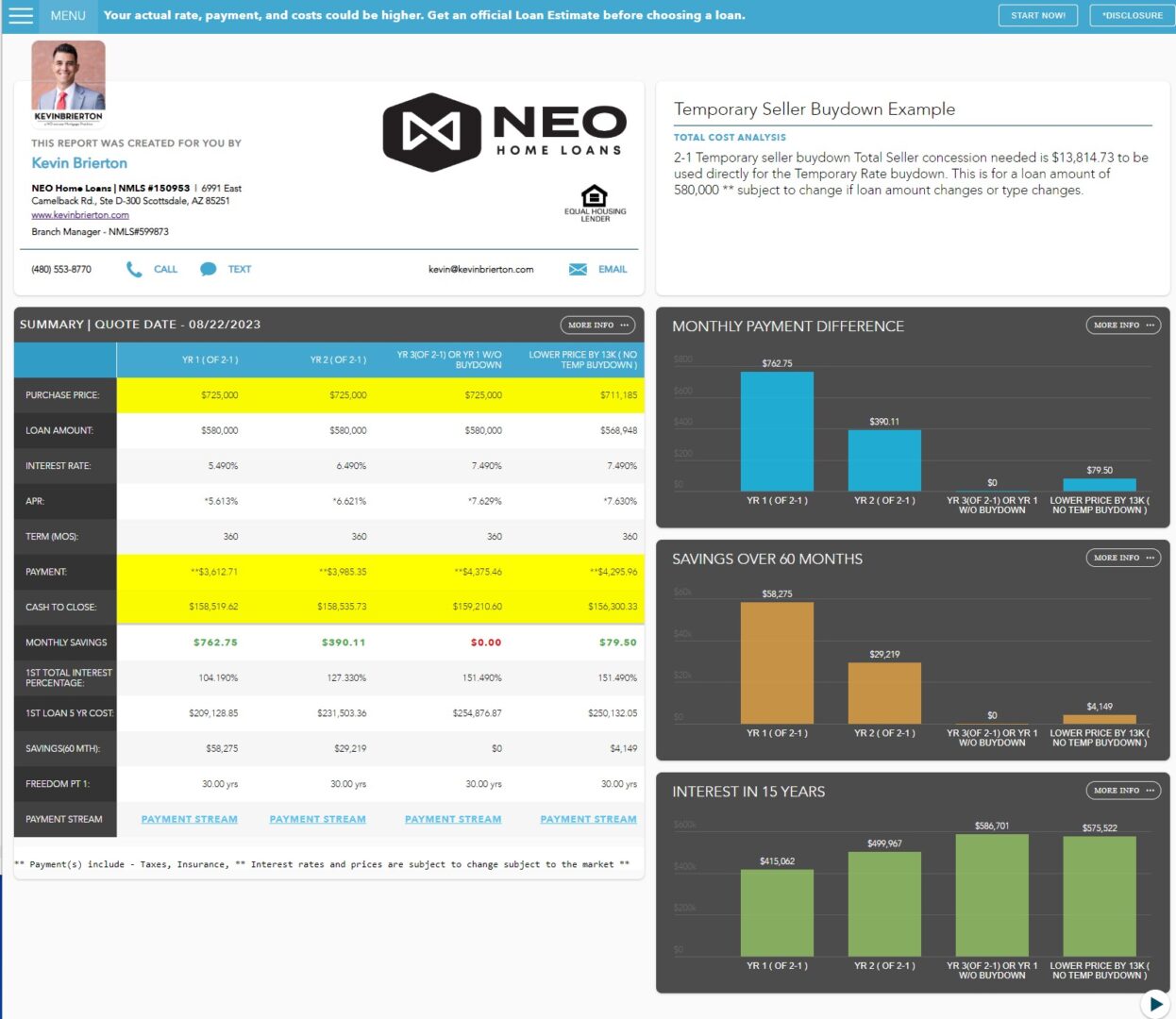
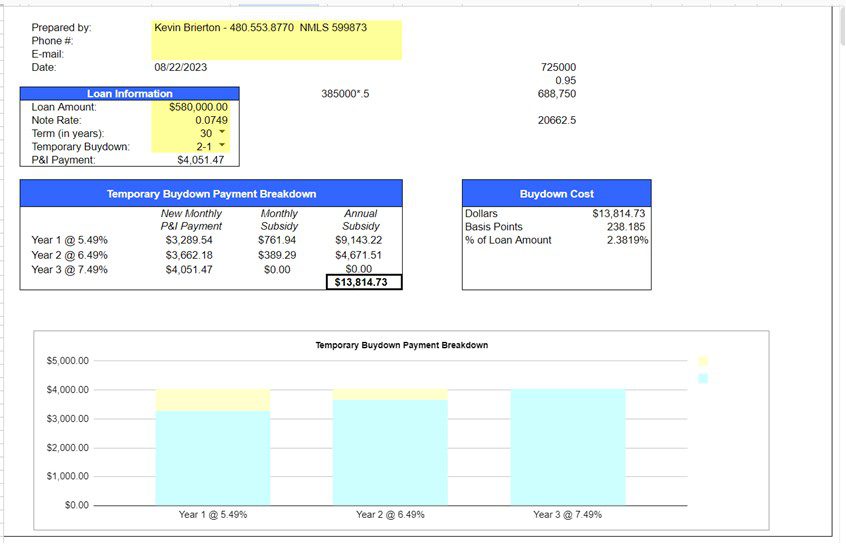
Here is an example of clear mortgage plan for a 2-1 Temporary Seller Buydown option

Turning a House Into a Home: The Benefits You Can Actually Feel
There’s a lot of conversation about home prices, mortgage rates, and affordability right now – and those things are important. But if you’re thinking about buying a home, it’s worth remembering something the headlines rarely talk about: people don’t buy homes just for financial reasons. They buy them for their lives. Because while homeownership can absolutely be a smart long-term financial…

Headlines Have You Worried about Your Home’s Value? Read This.
Hearing talk about home prices falling? That may leave you worried about whether your house is losing value. But here’s what you need to know. While some local markets have seen small price dips this year, home prices are not falling nationally. So, don’t let the headlines scare you. The vast majority of the country is actually seeing prices rise.…

Housing Affordability Improves as Buyers Look Ahead to 2026
Inside Lending – Week of December 22, 2025 QUOTE OF THE WEEK “Let’s have some new cliches.”—Samuel Goldwyn, Polish-born American film producer and pioneer in the American film industry NATIONAL MARKET UPDATE Existing Home Sales gained in November, hitting a nine-month high. The median price is just 1.2% higher than year ago, as affordability improves—wage…

Home Affordability Quietly Improves Across the U.S.
Inside Lending – Week of December 15, 2025 QUOTE OF THE WEEK “You wouldn’t have won if we’d beaten you.”—Yogi Berra, American professional baseball catcher, manager, and coach NATIONAL MARKET UPDATE Nationally, homes are becoming more affordable. The median list price of all homes in the U.S. is $427,900, while the median price of new…

Your Equity Could Change Everything About Your Next Move
A lot of people are asking the same thing right now: “Is it even a good time to sell?” And the truth may come as a bit of a surprise… For many homeowners, the answer is a strong yes. Why? Because of one major factor working in your favor: your equity. Odds are, if you’ve lived in your home for a while,…

Why Selling Your House This Winter Gives You an Edge
Spring gets all the attention, but it’s not always the best time to sell a house. Yes, more buyers show up, but so do a lot of other sellers. Winter is different. With fewer homes on the market, your house has a much better chance of standing out. And that one advantage can make a big…

Why a Reverse Mortgage Was the Better Move Than a Traditional HELOC
Reverse Mortgage – Case Study – Larry & Julie, Age 70 When most people think about tapping into their home equity during retirement, they default to the traditional route: a Home Equity Line of Credit (HELOC). But for many retirees, there’s a smarter and more flexible option—especially when you’re trying to keep monthly expenses down.…

This May Be the Best Time To Buy a Brand-New Home
New home construction today is giving buyers something it feels like they haven’t gotten much lately: a real shot at both the home they want and the deal they need. More brand-new options are on the market right now, and builders are rolling out incentives that make these homes more affordable than many people expect. It’s a combination…

What Your Home Equity Really Earns — and Why That Matters
Most homeowners assume their equity is “working” for them. The truth is… equity doesn’t earn a rate of return the way your investments do. And understanding that difference is one of the biggest unlocks in the Certified Liability Advisor toolbox. Home equity grows in two ways only: That’s it. There’s no dividend, no interest credit,…
P.S. Can I count on you to contact me if you hear that a friend, family or coworker is looking to buy, sell or refinance? Call/Text 480.553.8770 - We'd be honored to help them too!