
Who Has the Upper Hand in the Greater Phoenix Housing Market?
Ask around and almost every buyer in the Valley wants to know if there’s a way to get a better deal. And just about every seller in Scottsdale, Gilbert, or Buckeye wants to know if they’ll still get top dollar.
The interesting thing is, both can be right at the same time. It just depends on which part of Maricopa County you’re standing in.
That’s because Greater Phoenix isn’t one housing market right now. It’s a patchwork. Some pockets clearly favor buyers. Others still favor sellers. And knowing which one you’re actually in can completely change your strategy, whether you’re writing an offer or setting a list price.
One Number Tells You Who’s Got Leverage
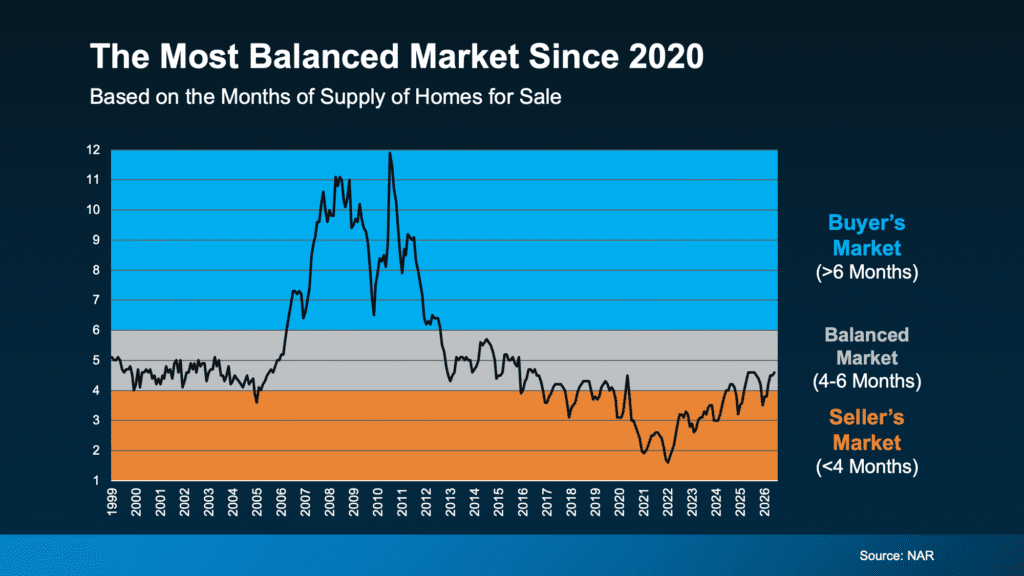
There’s one number that tells the story faster than anything else: months’ supply of homes for sale. Imagine no new homes got listed starting today. Months’ supply tells you how long it would take to sell everything currently on the market at today’s pace.
Generally speaking:
- Fewer than 4 months: sellers usually have the advantage
- 4 to 6 months: buyers and sellers are on more equal footing
- More than 6 months: buyers can usually negotiate
Here’s where it gets interesting locally. Greater Phoenix carried roughly 23,700 active listings in July, which works out to about 3.8 months of supply according to ARMLS. By the textbook, that’s technically seller territory.
But it doesn’t feel that way on the ground. Demand has been thin enough that homes are sitting longer, and sellers across much of the Valley are negotiating again on price, closing costs, and repairs, something that would have been unthinkable in 2021. The median sale price has held close to $450,000, basically flat since June. So the headline number says one thing, and buyer leverage on the ground says another. That gap is the whole story.
The Tale of Two Markets: Why ‘Balanced’ Doesn’t Mean the Same Thing Everywhere
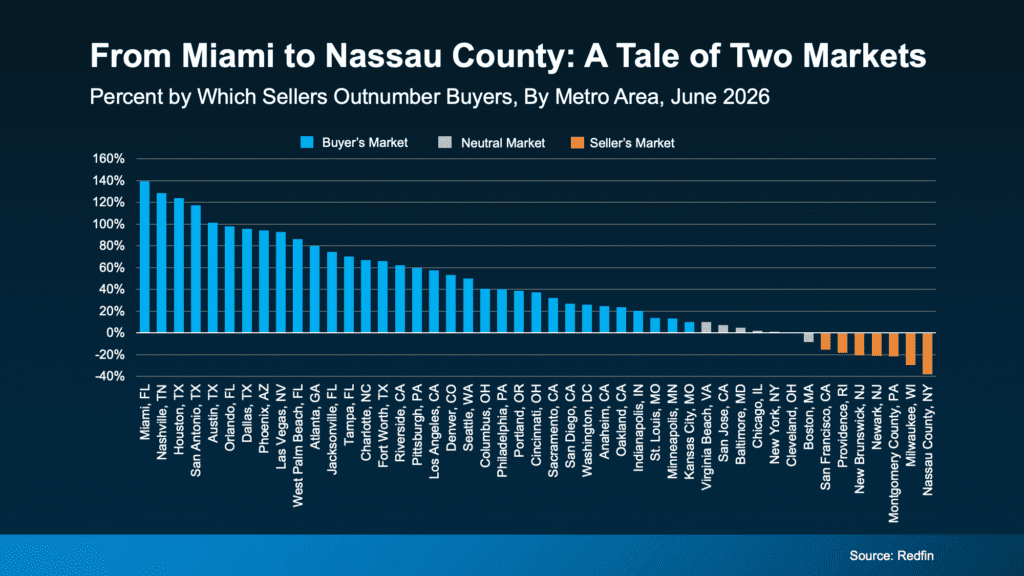
Zoom out to a metro-by-metro comparison and Phoenix shows up as one of the more buyer-leaning large metros in the country right now, well ahead of the national shift toward buyers.
But metro-wide numbers flatten out a lot of local reality. Within Maricopa County alone, the experience varies block by block:
- Luxury and view-lot pockets in places like Scottsdale and Arcadia are still seeing real demand and firmer pricing.
- Fast-growing West Valley communities like Buckeye, Surprise, and Goodyear have more inventory relative to demand, which tends to hand buyers more room to negotiate.
- East Valley cities like Gilbert, Queen Creek, and Chandler sit somewhere in between depending on price point, and price segment matters as much as location. Homes above $1 million are moving differently than homes in the $400,000 to $600,000 range.
Same metro area. Very different experiences depending on where and what price point you’re looking at.
The Biggest Mistake You Can Make Right Now
The biggest mistake isn’t assuming it’s a buyer’s market. It isn’t assuming it’s still a seller’s market either. It’s making any assumption about your neighborhood without checking the actual numbers first.
In one Maricopa County zip code, a buyer might get thousands of dollars in concessions from a motivated seller. In another, a well-priced home is still getting multiple offers within days. Your plan has to be based on your specific submarket, and that takes local expertise, both from your agent and from someone who can show you what financing options actually make sense given where rates and terms sit today.
Bottom Line
Greater Phoenix isn’t one-size-fits-all, and neither is your financing strategy.
If you’re wondering who has the upper hand in your neighborhood, and what that means for your mortgage approach, let’s talk. I’ll walk you through what the numbers actually look like where you’re buying or selling, and build a strategy around it.
Schedule your free Mortgage Strategy Call
Your No Excuse Lender
Kevin
